The Summary:
In Tony Williams’s article, Chain Saw Massacres: The Apocalyptic Dimension, Williams defends the stalker and slasher films that are often considered worthless trash. These types of films were the product of a cultural movement that started in the 70’s and erupted into the 80’s. Williams poses his views that “the full nihilistic apocalyptic vision emerges in the eighties” which is a counterargument to Christopher Sharrett’s view on the subject. Analogies are made between stalker and slasher films and historical and cultural events such as the views of the Puritans and the idea of the American Dream. Comparisons of the fears of the Puritans and the lifestyle of the murderous family are made in the article to suggest they are one in the same. Williams goes on to an in depth analysis on the film Texas Chainsaw Massacre which brings back ideas that the events in this film are inspired by the deepest fears of people in history. There are correlations between the good and evil characters to show ways they are similar. There is a section that piqued my interest about foreshadowing events. Williams addresses that the scene when the gang picks up Hitchhiker, the stories on the radio about different acts of violence are foreshadowing the coming events of the family violence. I interpreted that normally when you think of family, you think of love, compassion, and kindness but with this family of cannibals you get violent, grotesque monsters.
My analysis:
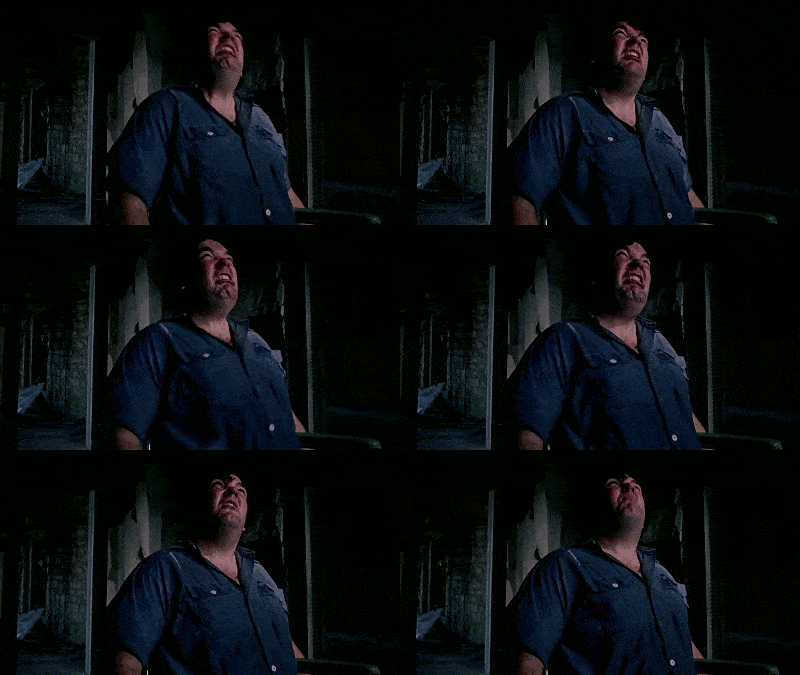
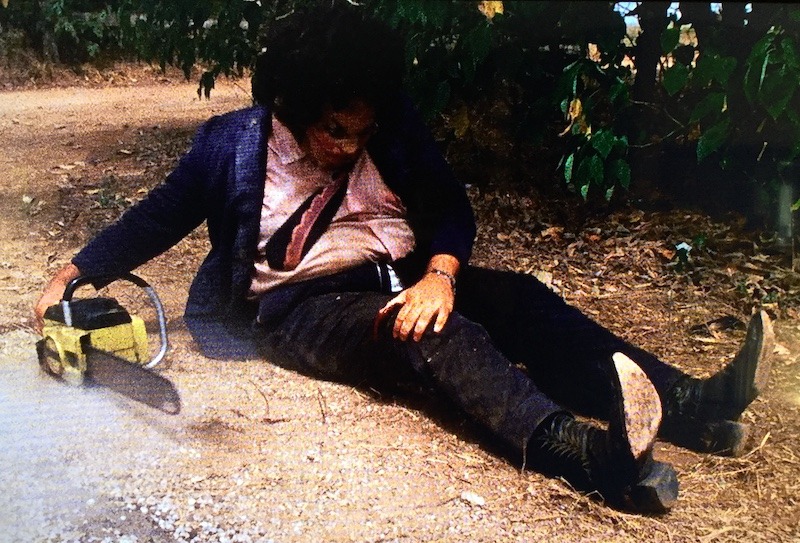
Tobe Hooper’s The Texas Chainsaw Massacre (1974) is a classic horror film that shows the disturbances and horror of a family of cannibals in Texas relating to the apocalyptic mood. Throughout the film, the audience sees a similarity between the two sets of siblings. The audience sees Sally care for her handicapable brother, Franklin just as the audience sees Hitchhiker look out for his brother Leatherface (Williams article). The audience sees child-like behavior out of both Franklin and Leatherface in two particular scenes. For Franklin, the audience sees a child-like temper tantrum when Sally and her friends are out exploring the old house while Franklin has to stay behind in his wheelchair. He spits and sticks out his tongue just as a jealous child would do. The audience sees the child-like tendencies in the scene where Jerry enters the “kill room”. Leatherface panics and whacks Jerry with the sledgehammer and then frantically runs away while making crying like sounds. Another example of Leatherface’s childish behavior is at the end of the film, as he ways his chainsaw in the air, watching Sally get away. He is throwing a temper tantrum just as Franklin had done earlier in the film. Leatherface is inaudible to his identification with the animals he has slaughtered and seems very unintelligent (Williams’s article). Like Jerry, the male characters are all killed very quickly and brutally whereas their female companion has a gruesome experience while still alive. After Pam is captured, she is hung from a hook like cattle while she watched Leatherface carve up Kirk. She is then stuffed in a freezer, still alive, to await her fate. This is a common theme seen in horror films, the male deaths are brief while the female’s pain is carried out for a while.
This family of cannibals in the film is a dark embodiment of the American dream in our history (Williams article). As technology emerges and begins to take over the meat/slaughter business, families with businesses of their own are pushed aside and can’t compete with the big corporations. In the van scene, just after the friends have picked up Hitchhiker, he talks about how killing an animal with the sledgehammer is the best way as opposed to the air gun recently created. In a way, this mirrors the situation that the cannibal family is going through, technology over the manual technique. Once their livelihood was compromised, the family of cannibals started killing and cooking travelers to sell to unexpecting customers for economic survival (Williams’s aritcle).
Another major thing in this film is the iconic use of weapons. Typically the serial killers in slasher and stalker films are very repressed. We see this trait in Leatherface. By using a chainsaw to murder and hack up him victims, this is a sexual release for him. Ironically, the only character killed by the chainsaw was Franklin. The use of this shows the fear of castration anxiety in Leatherface and he uses this weapon to show his dominance and strike fear into his victims. The audience sees at the end of the film when the chainsaw penetrates Leatherface’s leg and he in a way is castrated by the fact that Sally escaped her fate.
 CMS 353 Blogs